Source regular length anti pilling hoodie for streetwear, casual wear, and custom branding
Explore 30 listings of regular length anti pilling hoodie options featuring cotton materials, custom logos, and various styles. Buyers can compare specifications like fabric weight, sleeve length, and packing details to find suitable suppliers for streetwear or casual collections.
Key considerations
Products List


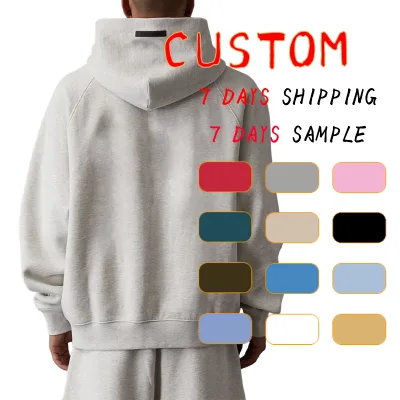
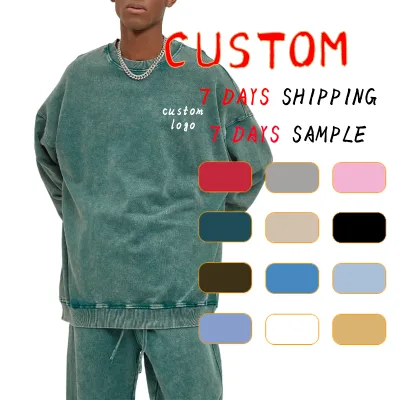
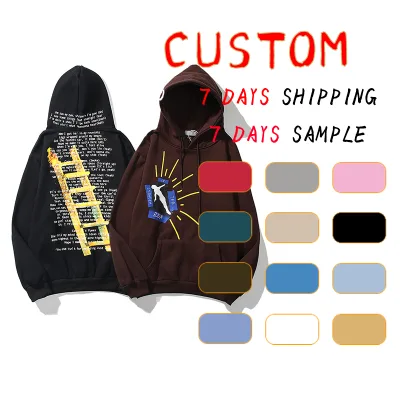
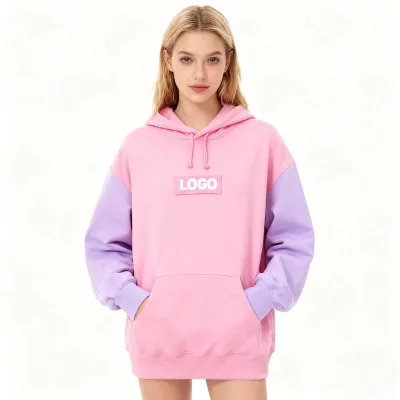


Comprehensive Sourcing Guide
Strategic Sourcing Guide for Regular Length Anti-Pilling Hoodies
The global market for casual outerwear has seen a significant shift toward durable, high-comfort garments that maintain their aesthetic integrity over extended wear cycles. For procurement professionals seeking a "regular length anti-pilling hoodie," the primary challenge lies in balancing fabric composition, manufacturing techniques, and supply chain reliability. This guide synthesizes available product attributes and industry standards to provide a disciplined framework for sourcing these specific items. The focus remains on verifying technical specifications, understanding cost drivers, and establishing robust quality control protocols without relying on unverified marketing claims.
Technical Specifications and Fabric Composition
The foundation of a high-quality hoodie lies in its material science. In the current supply landscape, 100% cotton remains a dominant specification for buyers seeking natural fiber comfort. Observed product data indicates that many suppliers offer garments with a fabric composition of 100% cotton, often paired with specific fabric weights to ensure durability. For instance, documented listings show fabric weights ranging from 420 GSM to 500 grams per square meter. These heavier weights are critical for anti-pilling performance, as denser yarn structures resist the friction that causes surface fuzzing.
When evaluating technical specifications, buyers must scrutinize the "Anti-Pilling" claim. While the core keyword implies this feature, the actual mechanism is often tied to the fabric weight and the finishing techniques employed. The observed data lists a wide array of technical processes, including garment dyeing, bleaching, flocking, and various embroidery methods. These processes can influence the final hand feel and surface texture. A garment described as having a "Regular" clothing length and "Long Sleeve" design typically adheres to standard sizing charts, but the "Fit Type" can vary significantly, with "Oversized" being a notable trend in the current market.
The following table outlines key technical attributes observed in the current market that buyers should verify against their specific requirements:
| Attribute Category | Observed Specification | Verification Requirement |
|---|---|---|
| Material Composition | 100% Cotton | Confirm fiber content via lab test or mill certificate. |
| Fabric Weight | 420GSM - 500g | Verify weight consistency across the production batch. |
| Clothing Length | Regular | Measure specific garment dimensions to ensure fit. |
| Sleeve Length | Long Sleeve | Check sleeve measurement relative to standard sizing. |
| Fabric Weight | 500 grams | Ensure weight matches the ordered specification. |
| Pattern Type | Solid, Graphic, DIY | Confirm print or dye method matches design intent. |
| Collar Style | Round Neck, Hooded | Verify hood construction and attachment method. |
Buyers should note that while "Anti-Pilling" is a desired outcome, the specific standard used to measure this (e.g., ASTM D3512 or ISO 12945) is not explicitly detailed in general product listings. Therefore, the procurement strategy must include a request for the specific testing methodology the supplier uses to validate their anti-pilling claims.
Compliance, Certification, and Standard Verification
Navigating the compliance landscape for textile products requires a clear distinction between verified certifications and general market standards. The provided context lists several high-confidence facts regarding product origin and standards, such as "S M L XL XXL 3XL" for sizing and "Carton" or "Box" for packing. However, regarding certifications, the input data contains low-confidence background information including ISO 9001, BSCI, RoHS, CE, GOTS, and OEKO-Tex.
Procurement teams must exercise caution when interpreting these certifications. The presence of a certification name in a supplier's general profile does not guarantee that a specific order of hoodies is certified. For example, while ISO 9001 is a standard for quality management systems, it does not certify the textile product itself. Similarly, GOTS (Global Organic Textile Standard) and OEKO-Tex are specific to organic content and harmful substance testing, respectively. Buyers should not assume that a supplier listing "ISO 9001" in their background has a valid, current certificate for the specific production batch of hoodies they are purchasing.
Instead of relying on background lists, the sourcing strategy should mandate the submission of valid, current certificates for the specific order. If the buyer requires organic cotton, they must request a GOTS certificate that covers the specific mill and factory. If the requirement is for safety regarding chemical residues, an OEKO-Tex Standard 100 certificate is necessary. The observed product origins, such as "Fujian, China" and "Guangzhou, China," indicate that the supply chain is concentrated in major manufacturing hubs. Buyers should verify that the supplier's facility in these locations holds the necessary local and international certifications relevant to their target export markets.
Cost Drivers and Pricing Dynamics
Understanding the cost structure of a regular length anti-pilling hoodie is essential for budgeting and negotiation. The observed price range in the market spans from $0.50 to $24.88 USD. This wide variance is driven by several factors, including material quality, order volume, and customization complexity. The minimum order quantity (MOQ) observed ranges from 1 to 1000 units, indicating a market that accommodates both small-batch prototyping and large-scale production runs.
The primary cost driver is the fabric weight and composition. A 500 GSM 100% cotton hoodie will inherently cost more than a lighter weight alternative due to the higher raw material usage. Additionally, the "Customization" attribute is a significant factor. The data confirms that customization is available, with options for "Customized" logos and "DIY" pattern types. Suppliers offering "ODM" (Original Design Manufacturing) services, such as those listing "Sp5der" or "Essential" as brands, may charge a premium for design development and tooling.
Packing methods also influence the final landed cost. The observed data lists both "Carton" and "Box" packing options. Custom packaging, such as branded boxes, adds to the unit cost but may be necessary for retail readiness. Furthermore, the lead time for samples, noted as "7 days sample order lead time: Support," suggests that rapid prototyping is available, though this may come at a higher per-unit cost compared to bulk production. Buyers should factor in the cost of these sample runs when calculating the total cost of ownership, especially if multiple iterations are required to perfect the anti-pilling finish.
Typical Applications and Market Positioning
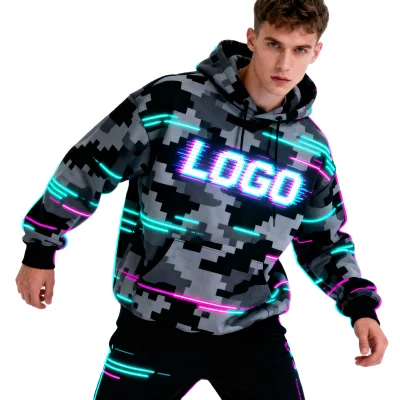
The "Regular Length" and "Casual, Simple" style attributes observed in the product data suggest that these hoodies are designed for versatile, everyday wear. The combination of "Long Sleeve," "Kangaroo Pocket," and "Fixed Hood" creates a functional garment suitable for a wide range of applications. The "Street Wear" style mentioned in the data points to a specific market segment where fashion-forward designs and brand identity are paramount.
These garments are frequently utilized in corporate branding, promotional merchandise, and retail fashion lines. The availability of "Customized" logos and "Front" logo positioning makes them ideal for companies looking to create branded apparel for employees or events. The "Oversized" fit type, observed in some listings, aligns with current fashion trends that prioritize comfort and a relaxed silhouette.
The "Season: Autumn" attribute indicates that these products are often marketed for cooler weather, though the 100% cotton composition suggests they may be less suitable for extreme cold without layering. The "Various Option" for fabric and "DIY" pattern types allow for customization that can target specific sub-segments, such as sports teams, school groups, or niche fashion brands. The "Regular" clothing length ensures a standard fit that appeals to a broad demographic, avoiding the niche appeal of cropped or extra-long styles.
Supplier Evaluation and Selection Criteria
Selecting the right supplier requires a rigorous evaluation process that goes beyond surface-level product descriptions. The observed data highlights several key attributes that serve as indicators of supplier capability. The presence of "ODM" supply types suggests that the supplier has the capacity for design and manufacturing integration, which is beneficial for buyers seeking unique products.
Buyers should prioritize suppliers who demonstrate transparency in their production standards. The listing of specific product models, such as "59-5," "165-2," and "H49," indicates a structured product catalog. However, the variation in standards, such as "S M L XL XXL 3XL" versus "M L XL XXL 3XL," suggests that sizing consistency may vary between suppliers. This necessitates a thorough review of the supplier's size charts and a request for sample garments to verify fit accuracy.
The origin locations, specifically "Fujian, China" and "Guangzhou, China," are known for their textile manufacturing expertise. Buyers should verify the specific factory's capacity and reputation within these regions. The ability to support a "7 days sample order lead time" is a strong indicator of operational efficiency. However, buyers must also inquire about the lead time for bulk production, as this can vary significantly based on order volume and fabric availability.
Quality Control and Long-Term Procurement
Quality control is the linchpin of a successful procurement strategy for anti-pilling hoodies. Given the wide range of observed fabric weights and technical processes, a standardized quality control plan is essential. Buyers should implement a pre-shipment inspection protocol that specifically tests for pilling resistance. This involves subjecting the garment to standardized abrasion tests to ensure the fabric surface remains smooth after simulated wear.
The "Technical" attributes listed, such as "Embroidered," "Printed," "Washed," and "Beaded," introduce additional points of failure. Each of these processes must be inspected for durability. For example, puff printing and 3D embroidery can be prone to cracking or peeling if not applied correctly. The "Garment Dyed" and "Color Blocked" techniques require checks for color fastness to ensure the dye does not bleed or fade during washing.
Long-term procurement considerations involve building a relationship with a supplier who can maintain consistency over time. The "Customized" nature of the logo and design means that the supplier must have the capability to replicate the exact specifications for future orders. Buyers should establish a clear specification sheet that includes all technical details, from fabric weight to packing dimensions. The observed "Single package size" of "24X20X6 cm" provides a baseline for logistics planning, but buyers should confirm if this changes for different order volumes or packaging types.
In conclusion, sourcing a regular length anti-pilling hoodie requires a methodical approach that balances technical verification with strategic supplier evaluation. By focusing on the observed facts regarding material composition, production capabilities, and quality standards, buyers can mitigate risks and secure high-quality products that meet their specific market demands. The key is to treat product attributes as observations to be verified rather than absolute claims, ensuring that every procurement decision is grounded in evidence and rigorous due diligence.
FAQs
What fabric composition is standard for these hoodies?
The standard fabric composition is 100% cotton, often with weights ranging from 420 to 500 grams. This dense cotton structure helps resist pilling and ensures durability during extended wear cycles.
Can I request custom logos on these garments?
Yes, customization is available for logos, with options for front placement and various printing methods. Suppliers support ODM services and offer DIY pattern types to meet specific branding needs.
What is the typical lead time for sample orders?
Sample orders can be supported with a lead time of 7 days. This allows for rapid prototyping before committing to larger production runs with bulk manufacturing timelines.
Which sizes are commonly available for regular length styles?
Common size standards include S, M, L, XL, XXL, and 3XL, though some listings may vary slightly. Buyers should verify specific size charts as fit types like oversized may alter standard measurements.
How are these hoodies typically packaged for shipping?
Packaging options include cartons or boxes, with specific dimensions like 24x20x6 cm for single packages. Custom packaging is available, which may influence the final unit cost and retail readiness.
What is the observed price range for these items?
The observed price range spans from 0.50 to 24.88 USD per unit. This variance depends heavily on fabric weight, customization complexity, and the minimum order quantity selected.
Can I find manufacturers located in specific Chinese regions?
Yes, manufacturers are located in Fujian and Guangzhou, China. These regions are known for textile expertise, and buyers should verify local factory certifications for specific export requirements.